Every version of the Bacon story usually starts with what he built — the science, the charters, the doctrine. This song starts earlier, with the one thing he never got to claim: his own birth. Two prisoners who shared a cell and a ruin become, within a few years, the queen and her closest favorite — and the son the record can't quite explain becomes the man who spends the rest of his life building things that outlast him instead. That reversal — a life spent constructing legacy because he was denied the one he was born to — felt like the emotional center of the whole series, and it's the kind of story a song can hold better than a footnote can.
This track is drawn from Episode 1 of "The Architect in the Shadows," a twelve-part series on the Francis Bacon Cabinet tracing Bacon's hidden hand in the founding of America. Episode 1 opens the series with its boldest claim: that Francis Bacon was the unacknowledged son of Elizabeth I, and that the New World he later engineered was the inheritance the Old World would never let him have. The full argument, with its sourcing and its caveats, lives at tymmberoutdoor.com/bacon-cabinet.html.
❧
Inspiration
On the lyrics
Written in the narrative-ballad tradition — third-person, plainspoken, told in order, letting the timeline itself carry the tension rather than reaching for imagery. The story starts small and personal, two prisoners sharing a ruin, and only widens outward at the very end into a doctrine, a nation. The chorus functions as a thesis statement rather than a hook — it states the song's claim rather than simply repeating an emotional peak, because this is a song about interpretation as much as it's about feeling.
On the sound
The arrangement itself is built to feel like a secret — restrained on purpose, not underproduced. A slow tempo in a minor key keeps the song from rushing past something concealed for decades. A low, sustained cello sits underneath rather than soaring strings on top: something felt more than heard. The one deliberate rupture is a distant horn on the bridge, marking the single place the private story collides with a public, political act — before the song pulls back into quiet for the final chorus, unresolved, the way the actual historical question stays unresolved.
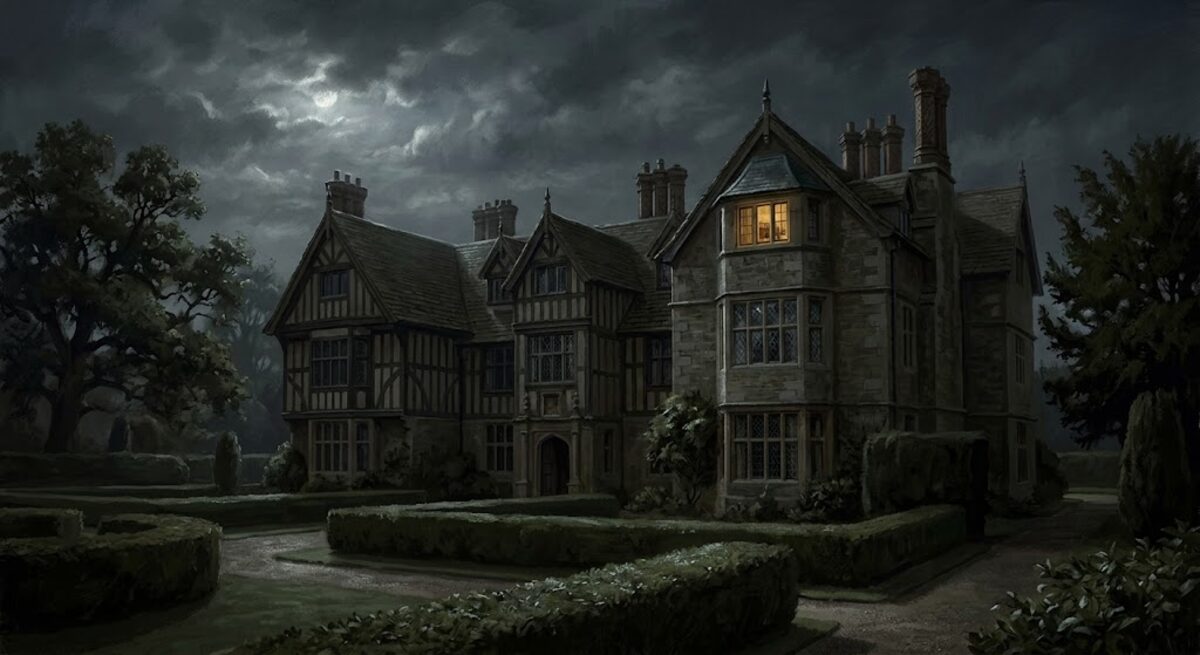
Illustration 2 — The House That Hid Him
❧
Lyrics
Two names, one wall One fate spared us both
Stone floor, cold light Two prisoners, one same night She kept her crown somehow He learned to wait
Years pass, she calls him near Keeps him close, keeps him here
Some call it favor I call it design A door built for two On the same side of the line
A house with no suspicion A name that hides in plain sight A birth no one questions A truth kept out of the light
Some call it favor I call it design A door built for two On the same side of the line
He raised his sword against her throne He stood and called it his own Fought for the one he couldn't claim Then carried, alone, the blame
No crown for the blood denied So he built one from inside Not a son on a throne A seed he planted and left behind
A seed, not a crown A seed, left behind
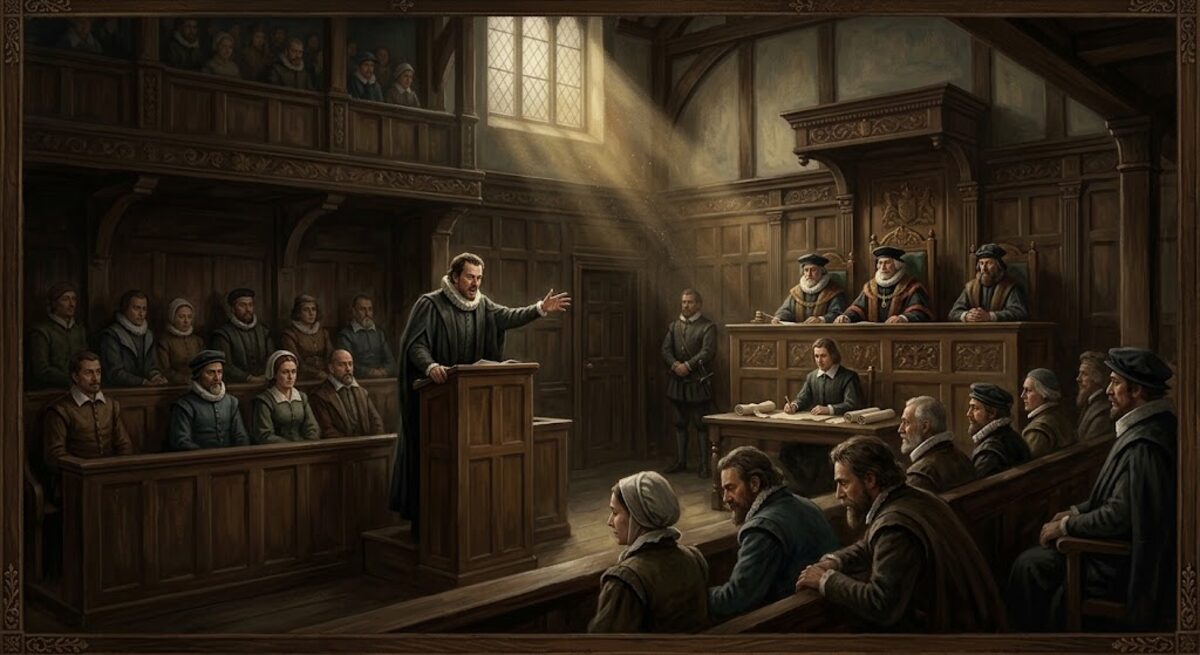
Illustration 3 — The Courtroom, 1601
Liner Notes
"Two prisoners, one same night"
Elizabeth Tudor and Robert Dudley were both imprisoned in the Tower of London in 1554, Elizabeth under suspicion of complicity in rebellion against Mary I, Dudley as the son of a duke executed for the Lady Jane Grey plot.
"Years pass, she calls him near"
Within days of her 1558 coronation, Elizabeth appointed Dudley Master of the Horse, a position placing him in close daily proximity to her for the opening years of her reign.
"A house with no suspicion / A name that hides in plain sight"
Francis Bacon was born in January 1561, recorded as the second son of Sir Nicholas Bacon, Elizabeth's Lord Keeper of the Great Seal, and Anne Cooke Bacon — a household prominent enough that its own privacy was protected by the machinery of state it administered.
"A truth kept out of the light"
References the 1571 Act of Treason, which changed succession language from "lawfully begotten" to "the natural issue of her Majesty's body" — a change the chronicler William Camden recorded as inserted at Dudley's own instigation.
"He raised his sword against her throne"
In 1601, the Earl of Essex, once Bacon's patron, led an armed uprising against the Crown.
"Fought for the one he couldn't claim / Then carried, alone, the blame"
Bacon joined the prosecution against Essex with notable intensity and later published a personal defense of his own conduct in the affair.
"A seed he planted and left behind"
Points forward to the book's later argument that Bacon's doctrine, rather than any acknowledged bloodline, passed to John Milton and onward through the Republic of Letters.
❧