The Bacon Academy ยท The Water Thread

From a lake level to a lesson

The Lake Level Watch page answers one question: how low is the lake today? This is what happens when you follow that question back to where the water came from, and forward to the people who depend on it.

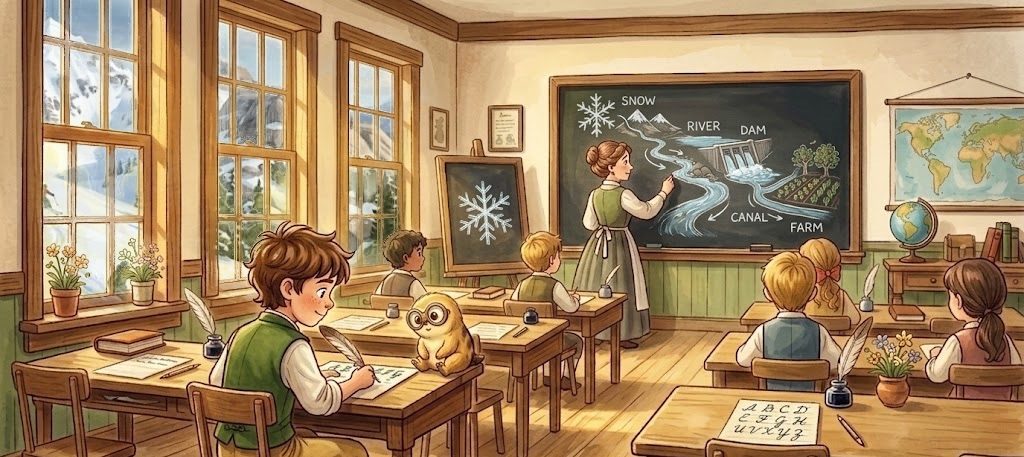
A classroom at the Bacon Academy. A teacher draws the path of water on a chalkboard, from snow to river, dam, canal, and farm, while students write with quill pens.
One number people check every morning, followed all the way back to a snowflake.
Francis Bacon stands beside his desk in a study, with a harbor and sailing ships in the window behind him and one hand open toward the reader in welcome. On the desk are an open book, a quill and inkwell, a map with a blue ribbon of river, a glass of water, brass dividers, and a sand timer.

A message from Francis Bacon

I spent my last years on a work I knew I would not finish: a plan to renew human knowledge by looking at nature before arguing about her.

A man cannot do that alone. He can only train the minds that will.

So I begin with the plainest thing I know. Look closely. Write down what you see. Test what you guess. A lake is a good place to start. Its level is a number anyone can read, and behind it stand a mountain, a river, and the people who live on what flows from it.

Whether you come as a parent, a student, or someone who works with this water every day, welcome to the Bacon Academy’s vision for learning.

Follow the number back to its source, and then forward to the table.

Francis Bacon

The idea

Most teaching starts with a standard and goes looking for an example. This starts with an example: a number people already look up every day. Behind the number is a story that runs from a snowflake on a mountain to a plate on a table, and it can be told to a six-year-old and argued over by a seventeen-year-old.

Nature makes the water. People manage it.

Bacon put it this way: “Nature to be commanded must be obeyed.” Novum Organum (1620), Book I, Aphorism 3.

Every stop on the journey shows who does which part. Along the way, students measure, predict, check, and learn the difference between what is known and what is guessed.

The journey in five arcs

The water thread follows the Rio Grande from the high country to the valley below Elephant Butte. Each arc looks at the same water in a different way. Under each one is a sample of what a younger and an older student might be asked.

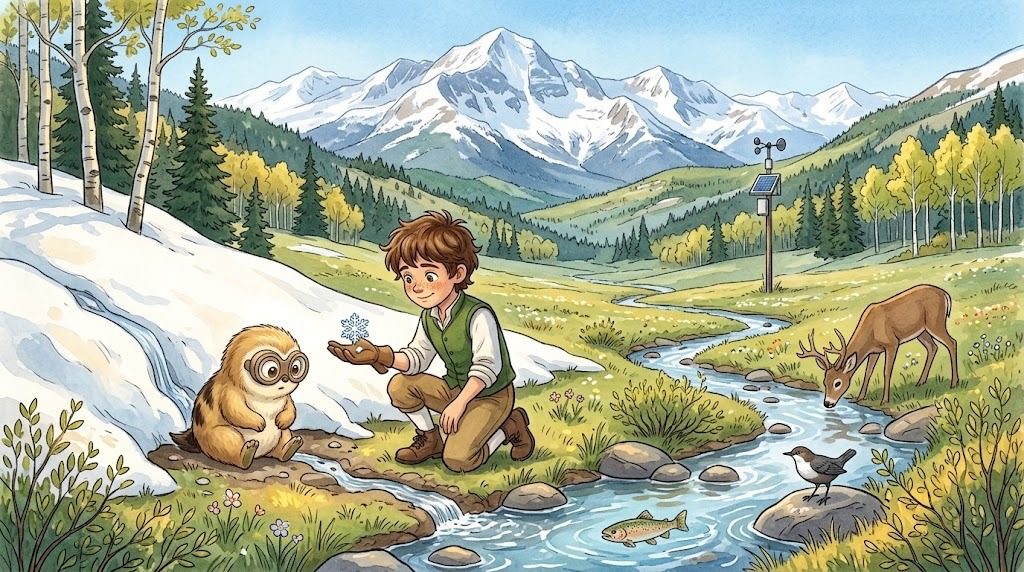
Storybook Francis holds out a glove with a single snowflake beside a melting snowbank in the Rio Grande headwaters, while Seed-Seeker watches the first trickle of a stream. Aspens, willows, a deer, and a small snow-monitoring station stand around them.Illustration to come

ARC 1

From Snow to River

An ecosystem

A snowflake lands in the mountains, melts, and finds its way into a stream. The stream becomes the Rio Grande, and everything along it, from cottonwoods to fish, depends on how and when the water arrives.

A younger student might ask

Where do rivers come from? How do they start, and how do they know where to go?

An older student might argue

A river always takes the easiest path.

From the writings of Francis Bacon

Man is the minister and interpreter of nature, and understands only as much as he has observed. So begin with the snowflake, and look until you can say what you saw.

Novum Organum, Book I, Aphorism 1 · Observation first
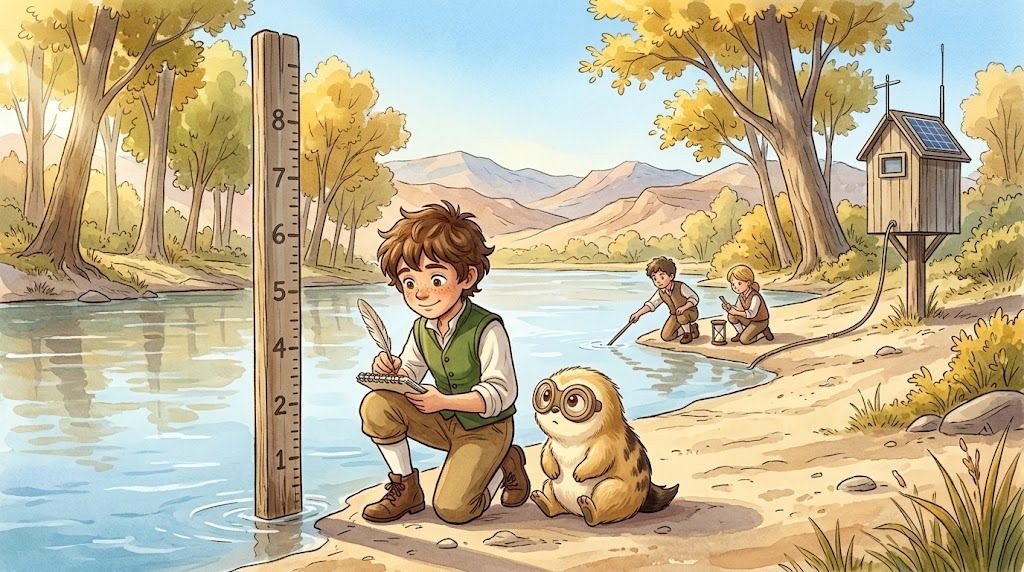
Storybook Francis kneels beside a painted gauge staff standing in the Rio Grande, writing the water height in his notebook while Seed-Seeker looks on. A small gauge house with a solar panel and antenna stands farther along the bank.Illustration to come

ARC 2

How We Know

The technology

Gauges, counters, and satellites tell us how much water is moving. Students start by measuring by hand, then learn what a number is, who made it, and when to trust it.

A younger student might ask

How do you think people know how much water is in a river without drinking it all?

An older student might argue

A number from a machine is more trustworthy than a number from a person.

From the writings of Francis Bacon

A single reading proves little. Set many readings side by side and let the pattern speak. The understanding “must not therefore be supplied with wings, but rather hung with weights.” A record of many readings is the weight.

Novum Organum, Book I · The Table of Degrees
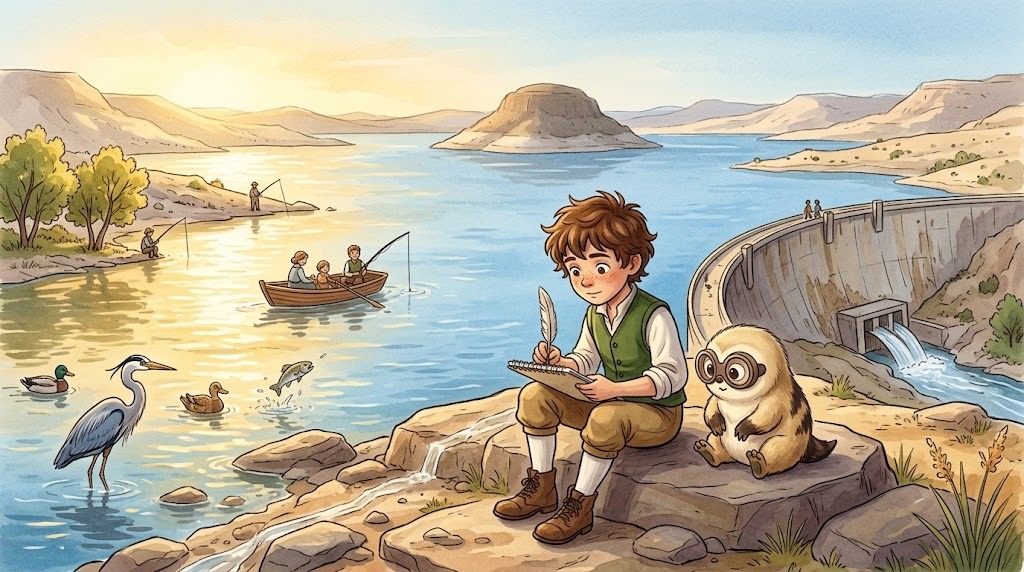
Storybook Francis sketches in his notebook on a rock at the shore of Elephant Butte Lake while Seed-Seeker watches. A heron wades nearby, ducks float, a fish jumps, a family fishes from a rowboat, and the dam stands at the right with water flowing from its outlet.Illustration to come

ARC 3

The Lake and the Dam

A home and a bank

At Elephant Butte the river stops and waits. The lake is a home for fish and birds and a bank for the water farms will need in summer. The dam decides when it moves on.

A younger student might ask

What do you think a dam is for, and who do you think decides when it opens?

An older student might argue

A reservoir's first job is to serve or service life.

From the writings of Francis Bacon

When two explanations both fit, do not argue over the word. Find the one case that can tell them apart. Is it a lake, or a reservoir?

Novum Organum, Book II · The Crucial Instance
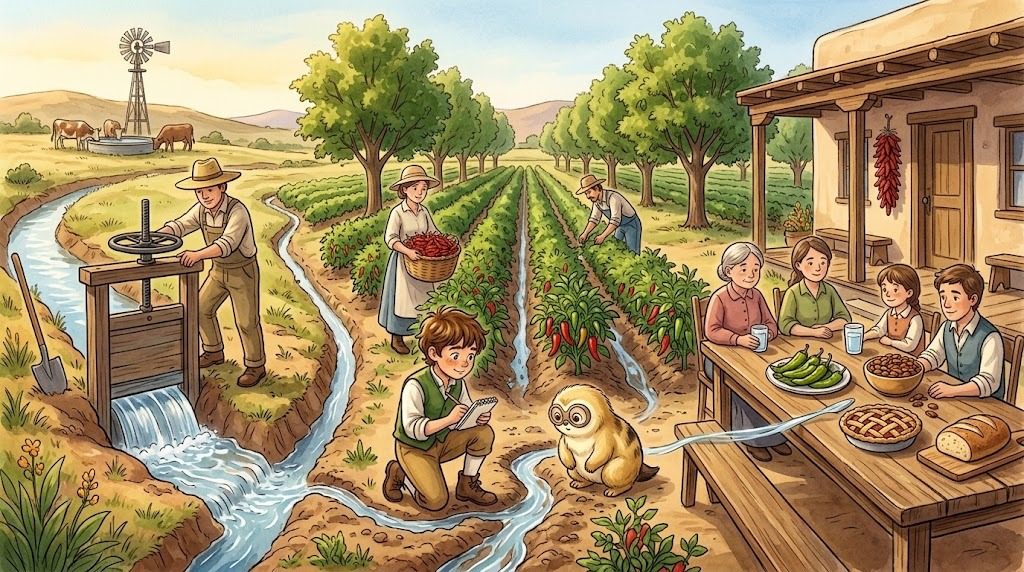
A thin ribbon of water links three scenes: a canal headgate with a ditch rider, a pecan orchard and chile field being harvested, and a family table set for dinner. A windmill and stock tank stand on a distant hill.Illustration to come

ARC 4

Canal, Field, and Table

Transportation, production, consumption

Water leaves the river in a canal, soaks into a pecan orchard or a chile field, and ends up on a plate. The ranch has its own version of the story, with windmills and stock tanks.

A younger student might ask

Can you find all the water in your dinner?

An older student might argue

Food labels should show how much water it took to grow it.

From the writings of Francis Bacon

Take care with words. Men agree on a name and suppose they have agreed on the thing. A canal and a river are not one thing merely because both carry water. Ask what differs.

Novum Organum, Book I · The Idols of the Marketplace
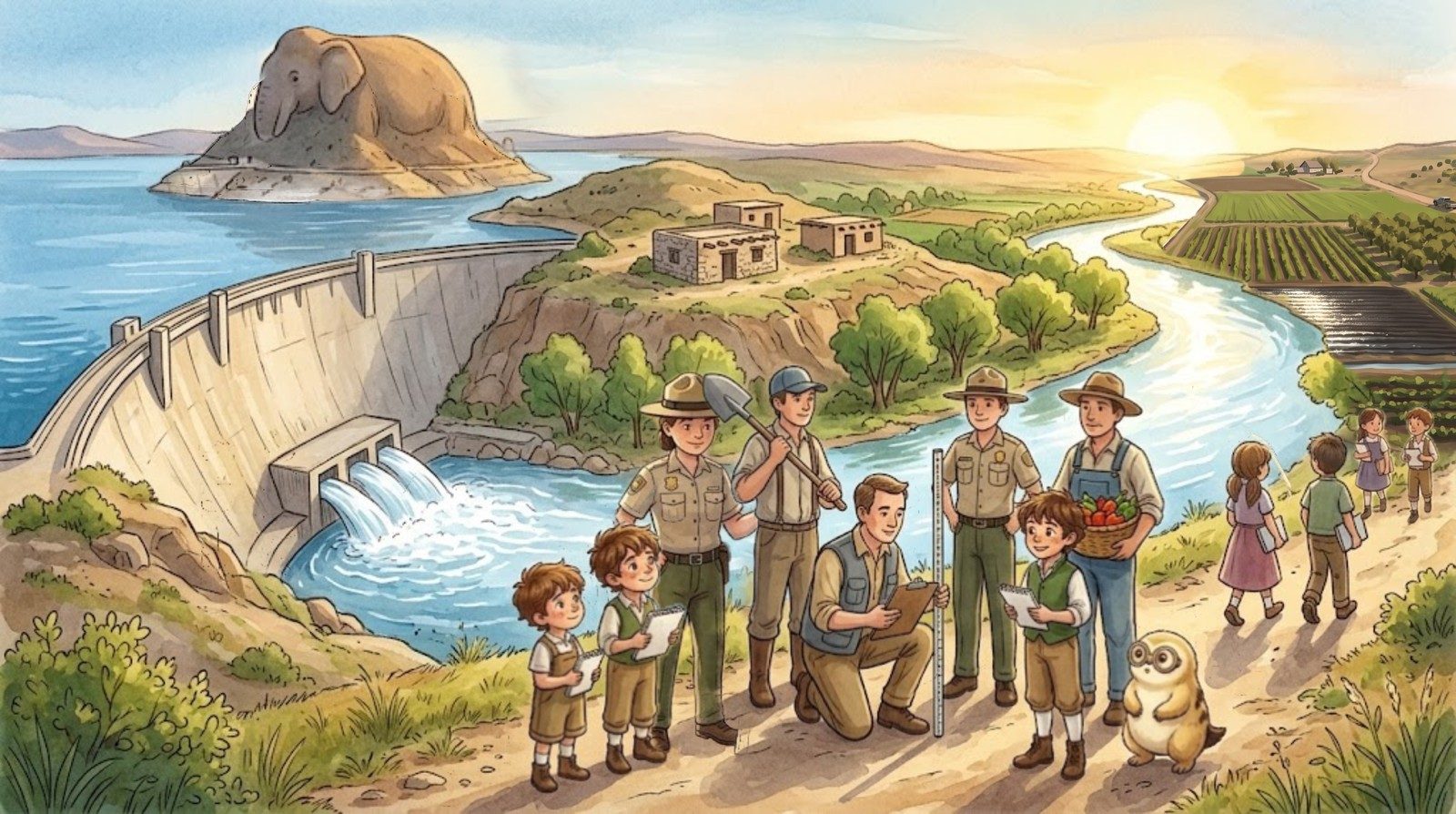
People who care for the water stand along a path below Elephant Butte Dam, where water pours from the dam's outlet into the river. They include a ditch rider, a hydrologist, park rangers, and a farmer, with Francis and Seed-Seeker beside them. The river winds past farm fields toward the setting sun, and children walk down the path toward the light.Illustration to come

ARC 5

The People and the Place

The jobs, the history, and the future

Ditch riders, hydrologists, park rangers, and farmers keep the water moving. Behind them is a century of history, from the 1905 authorization of Elephant Butte Dam to the choices today's students will inherit.

A younger student might ask

If you were in charge of the water for a whole valley, what would you want to know first?

An older student might argue

You do not need a degree to manage water well.

From the writings of Francis Bacon

Whatever you conclude about the future is a first vintage: draw it, taste it, and be ready to pour it out. And leave a good record for those who come after you.

Novum Organum, Book II · The First Vintage

How each stop is taught

Every stop on the journey is built the same way, in five parts. Younger students get open questions anyone can answer. Older students get a challenge tied to what they just learned.

  1. What it is. How it forms and where it comes from.
  2. Its role in nature. What it does for living things.
  3. How people use it. What they make or do with it.
  4. How long it lasts. How often it is there, under what conditions, and what makes that possible.
  5. How we keep it available. What it takes for everyone to have it.

Back to the number

Come back to today's lake level and read it again. The number is the same, and now you know what is behind it. One page of live data became a map, a set of lessons, and a way to learn about a place. The same approach can start from any number people already care about.

Want to see where the thread leads, from a young child's first question to a graduate's first job in water? New Mexico Outdoor Water Education is the destination page for the whole path.

Want to know more about the man behind the method? The Bacon Cabinet is the place to start, and the Academy can be found from there.

The lessons for the water thread are being built. The questions on this page are samples from the working map.